
 The center
 Back to the main menu
 Research
 Laboratories
 Transfer
 News
 Galician


The University of A Coruña has announced the winning projects of the latest edition of «Divulgando o noso», a programme promoted by its Scientific Outreach Unit. The initiative aims to bring the research and scientific work carried out at the university closer to the public through scientific infographics.
In the 2026 edition, two of the five winning projects were developed by researchers from the Centre for Technological Innovation in Building and Civil Engineering (CITEEC), highlighting the diversity of research topics and the outreach potential of the work carried out by its research groups.
«When Galicia Was Home to Crocodiles and Hippos»
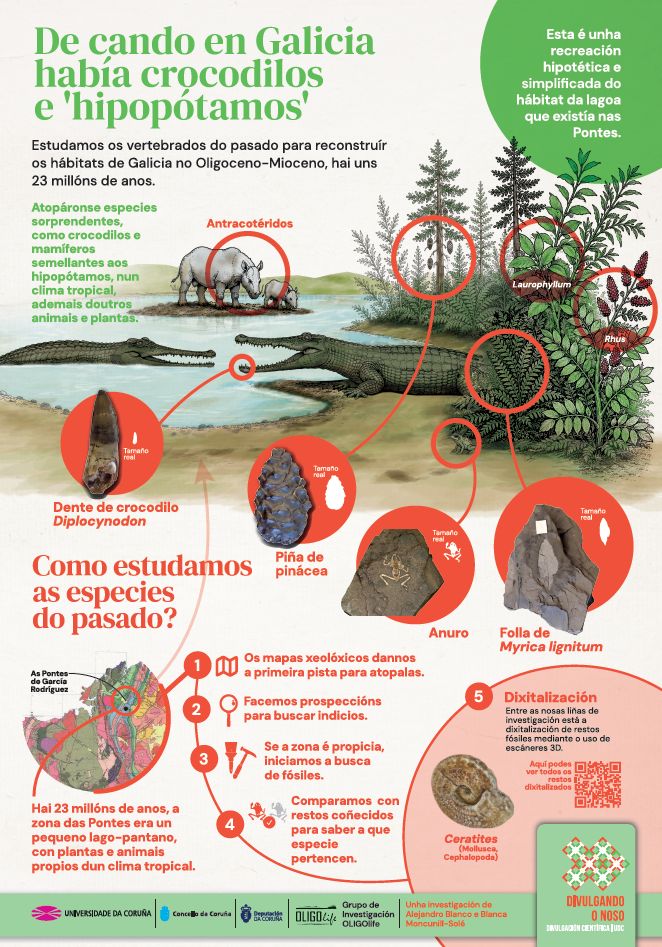
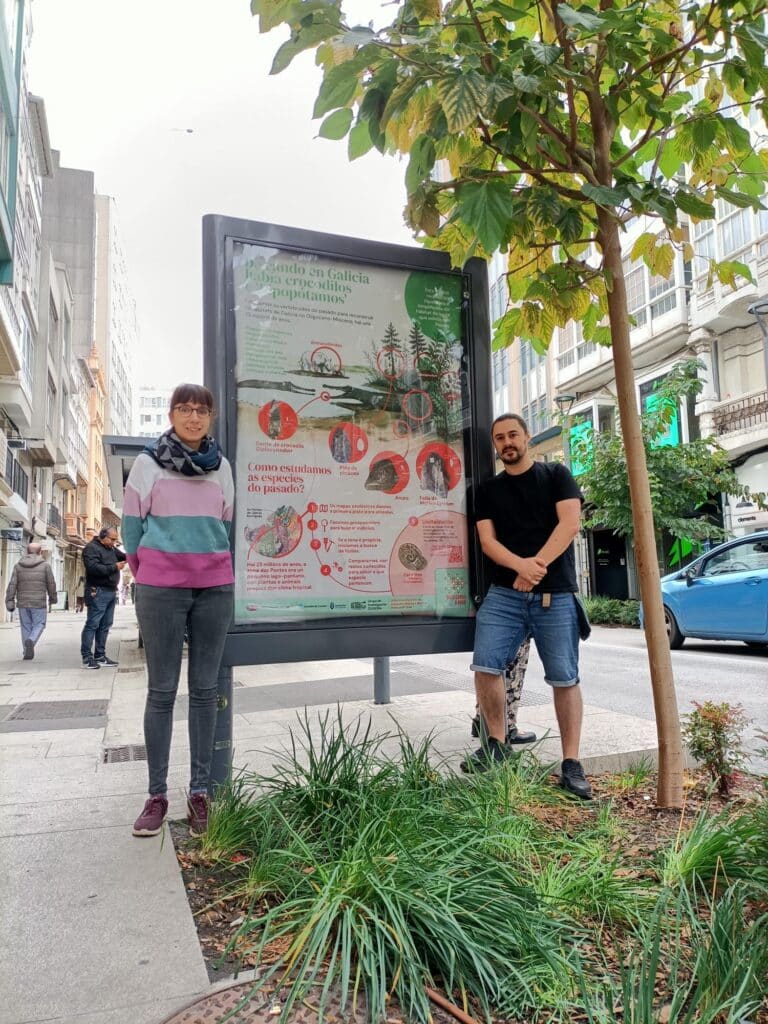
Alejandro Blanco Calvo and Blanca Moncunill Solé, from the Environmental Change and Palaeobiology Research Group (GRICA-BIOpast), present a project focusing on the fossil record of vertebrates from the Palaeogene and Neogene periods in Galicia. The initiative seeks to challenge the widespread misconception that Galicia lacks fossils of scientific interest, showcasing a palaeontological heritage that makes it possible to reconstruct the ecosystems and life forms that inhabited the region millions of years ago.
The infographic also aims to introduce the public to the projects and research lines developed by the BIOpast group, while demonstrating how new technologies —including tomography, heritage digitisation and 3D printing— are being incorporated into a traditional discipline such as palaeontology.
One of the main focuses of this project is the research carried out במסגרת the OLIGOlife project, which studies Oligocene and Miocene fossils found in Galicia, with particular attention to specimens recovered from the As Pontes mine. The fossil record includes plant remains from species such as Goniopteris styriaca, Salix angusta and Myrica lignitum, as well as animal fossils including molluscs, crocodiles, anthracotheres, frogs, fish and small rodents.
These findings make it possible to reconstruct the landscape that existed around As Pontes approximately 23 million years ago, when the area was characterised by a lake and marsh environment, with flora and fauna typical of a subtropical climate.
«Circular 3D Construction: A Proposal Focused on Construction Innovation»
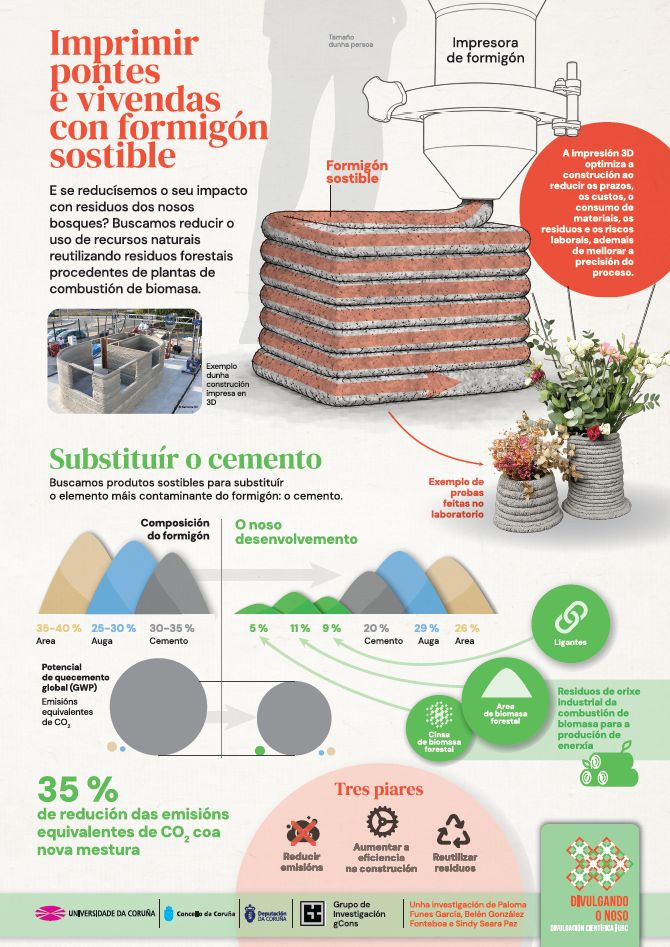
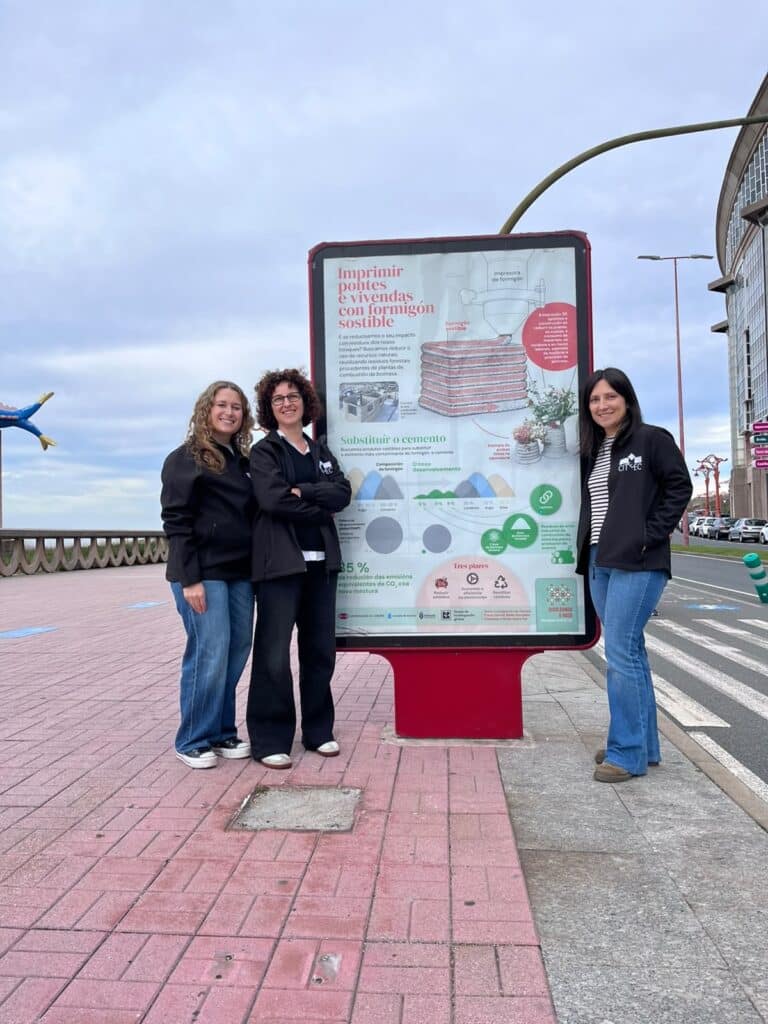
Paloma Funes García, Belén González Fonteboa and Sindy Seara Paz, from the Construction Research Group (gCONS), present an infographic exploring the potential of 3D concrete printing to help move towards a more efficient and environmentally friendly construction model.
Concrete is one of the most widely used materials in the world, and cement production accounts for around 8% of global CO₂ emissions. In this context, 3D printing offers new opportunities to reduce the environmental impact of construction by enabling building components to be manufactured layer by layer, using only the material required. This process helps reduce construction times, costs, waste generation and occupational risks.
One of the main technological challenges is to develop mixtures with the right properties for the printing process: they must flow properly through the pumping system, be continuously extruded through the nozzle, and retain their shape and stability once the different layers have been deposited.
As part of the Eco3DConcrete project, developed by the gCONS group in CITEEC’s laboratories, researchers are working on partially replacing cement with alternative materials, including ash and sand derived from forest biomass. These are abundant waste materials in Galicia that can be reused as raw materials, preventing them from ending up in landfills.
The results of this research make it possible to reduce the mixture’s equivalent CO₂ emissions by 35%, demonstrating the potential of innovation in materials and construction processes to promote more sustainable building practices.


 Contact us


