
 The center
 Volver al menú principal
 Research
 Laboratories
 Transfer
 News
News Español

Intelligent transport and sustainable mobility
One of the most important global objectives of our time is to reduce greenhouse gas emissions from maritime and land transport, as these are responsible for a quarter of total emissions into the atmosphere.

Clean and efficient transport
Urban and metropolitan transport policies are moving towards active, non-motorised travel, the use of public transport, and the development of cleaner and more efficient means of transport.
CITEEC’s lines of work focus on the operation of public transport systems, transport planning, the improvement of rail systems, and the pursuit of more sustainable mobility in urban and metropolitan areas. In addition, they study the design, safety and efficiency of maritime transport and the development of predictive models to help with decision-making in port operations.

Urban and metropolitan transport policies are moving towards active, non-motorised travel, the use of public transport, and the development of cleaner and more efficient means of transport.
CITEEC’s lines of work focus on the operation of public transport systems, transport planning, the improvement of rail systems, and the pursuit of more sustainable mobility in urban and metropolitan areas. In addition, they study the design, safety and efficiency of maritime transport and the development of predictive models to help with decision-making in port operations.


L2.1.1 Application of Big Data to mobility models and public transport systems
L2.1.2 On-demand mobility and Mobility as a Service (MaaS)
L2.1.3 Road safety studies
L2.2.1 Development of integrated mobility approaches that incorporate transport networks and territory planning
L2.2.2 New technologies for a sustainable transport model
L2.2.3 Models of intelligent transport systems and routes that optimise the management and operation of transport networks
L2.2.4 Specialist tools for transport modelling, planning and management, and the evaluation of mobility plans
L2.2.5 Spatial planning for sustainable mobility (green infrastructure) and the development of potential for multimodal transport
L2.2.6 Geospatial analysis of transport infrastructure using LIDAR technology, satellite imagery, vector data or digital terrain models (DTMs)
L2.2.7 Integration and optimisation of logistics chains and intermodal goods transport networks. Analysis of port operations (key hubs in global trade) and the promotion of rail transport for goods
L2.3.1 Structural and functional design and optimisation of coastal protection structures and a study of different types of breakwaters
L2.3.2 Management and decision-making systems in port operations (image processing methodologies and predictive models using machine learning)
L2.3.3 Behaviour of moored vessels and definition of operational safety and efficiency thresholds; monitoring of vessel movements and identification of incidents; studies of resonance, the influence of long waves and other maritime weather parameters
L2.3.4 Technology and instrumentation for the study of harbour basins: physical and numerical modelling. Wave propagation, wave-structure interaction, overtopping and maintenance strategies for breakwaters, including climate change scenarios
L2.4.1 Crashworthiness studies in automotive engineering
L2.4.2 Impact studies in aeronautical engineering
L2.4.3 Optimisation of structural designs in aircraft fuselages


Resultados esperables

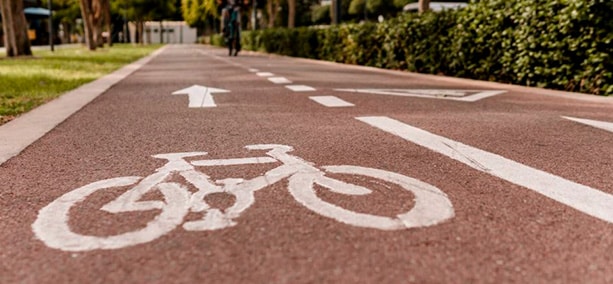


Sustainable mobility
To advance the search for new approaches that promote smart and sustainable mobility, reducing pollutant emissions as well as the carbon footprint.
Clean urban transport
To create cities with urban environments that are more citizen-friendly and less reliant on private cars.
Digitisation
To use new digitalisation tools to achieve connected, automated, smart and less polluting mobility that is better suited to the environment.
Optimising logistics
Committing to co-modality and inter-modality to reduce dependence on conventional road transport and optimise the efficiency of logistics networks.
Port efficiency
To analyse the dynamic behaviour of moored vessels and the design of breakwaters as key factors in the safety and efficiency of port basins.
Galicia in the spotlight
Special interest in analysing transport links between cities and their metropolitan areas, transport needs in urban areas, and the management of ports and estuaries.


 Contáctanos


